Helmet With Rear Camera: 4 Best Picks Compared (2026)
Looking for a helmet with rear camera? Compare four options on key specs, fit, and camera setup, with pros, cons, and a buying guide to help you choose.
 By Delilah Dawson
Updated November 2026
Riders who want a helmet with rear camera usually have one of three goals: recording their ride for memories or training review, keeping a record of traffic behind them after an incident, or simply getting a clearer view of what is happening over their shoulder. The helmets and camera systems in this comparison were selected by checking manufacturer specifications, brand reputation, and the patterns owners tend to describe in feedback, with attention to mounting security, battery life, storage, and how well each setup fits real riding. Below you will find four picks, a buying guide, and answers to common questions.
Our top picks at a glance
- 1TOP CHOICEBest overallDC Smart Bike Helmet with Cameras Dual HD Front & Rear Video RecorderView on Amazon
- 2
 Best for dual front and rear recordingLKT 2K Motorcycle Helmet Camera Front & 1080P Rear with 64GB CardView on Amazon
- 3
 Best for long sessions on a budgetNvgfelis Dual Screen Action CameraView on Amazon
- 4
 Best for flexible mountingRunCam Helmet Camera 4K Bendable Action CameraView on Amazon
Our Top Picks
Quick Comparison
| Product | Best for | Key feature |
|---|---|---|
| DC Smart Bike Helmet with Cameras | Overall use with app control | Dual HD front and rear recording with Bluetooth app control |
| LKT 2K Motorcycle Helmet Camera | Dual front and rear recording | 2K front camera with 1080P rear camera and included 64GB card |
| Nvgfelis Dual Screen Action Camera | Long sessions on a budget | Dual screen with two batteries and a 16GB card included |
| RunCam Helmet Camera 4K | Flexible mounting | Bendable 4K action camera with app control |
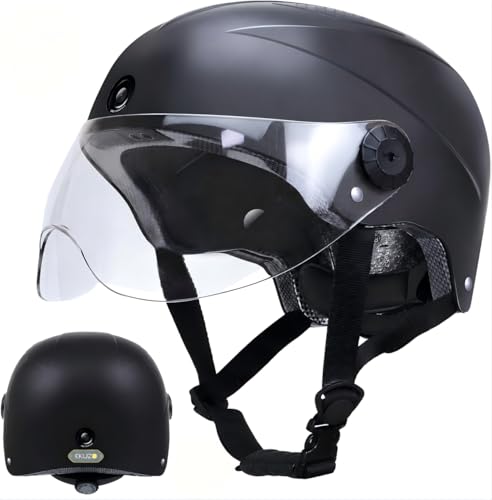
DC Smart Bike Helmet with Cameras Dual HD Front & Rear Video Recorder
DC Smart Bike Helmet with Cameras Dual HD Front & Rear Video Recorder for Ebike & Electric Scooter, Bluetooth App Control Action Cam Helmet, CPSC Certified (Black)
Best for: Overall use with app control and simultaneous front and rear recording
This option suits riders who want front and rear footage in one integrated package and are comfortable managing settings through a smartphone app. It is marketed for e-bikes and electric scooters, but the dual-camera layout also appeals to motorcycle riders who want a rear record of traffic.
Key specs
- Dual HD front and rear cameras
- Bluetooth app control
- Listed as CPSC certified (confirm current certification on the listing)
- Black finish
Pros
- Records front and rear views together
- App control avoids fiddling with buttons while riding
- Integrated design reduces the number of separate mounts to manage
Cons
- Phone pairing takes some setup time before the first ride
- Rear camera placement depends on the helmet shell and may need adjustment for a clean angle
Bottom line: A strong pick for riders who want a complete front and rear system with app-based control and do not mind a short setup process.
View on AmazonLKT 2K Motorcycle Helmet Camera Front & 1080P Rear with 64GB Card
LKT 2K Motorcycle Helmet Camera Front & 1080P Rear with 64GB Card, 1920mAh 5H Battery, Dual Bike Dash Cam with Sony Starvis Sensor, WiFi Night Vision Cycling Camera Bike Camera
Best for: Dual front and rear recording with extra storage included
This is a good match for riders who want higher front resolution and a rear camera in a single kit, along with a memory card already in the box. It also suits those who plan to review footage at night, since the listing highlights night vision and a Sony-branded sensor.
Key specs
- 2K front camera and 1080P rear camera
- 64GB card included
- 1920mAh battery listed
- WiFi connectivity and night vision
Pros
- Front camera resolution is higher than most basic helmet cameras
- Card included, so recording can start right away
- Night vision helps with low-light footage
Cons
- Battery life will be shorter at higher resolutions, so plan to carry a charger or power bank
- Wiring routing around the helmet requires patience during installation
Bottom line: Best for riders who want a higher-resolution front view combined with a rear camera and included storage.
View on AmazonNvgfelis Dual Screen Action Camera
Nvgfelis Dual Screen Action Camera, 1080P 16MP Waterproof Camera, Black | 40M Underwater Camera, with 2x1050mAh Batteries, 16GB Card & Full Accessories for Helmet, Bicycle,etc.
Best for: Long sessions on a budget with spare batteries included
This kit is aimed at riders who record for extended periods and want spare power on hand. Its dual screen and multiple included accessories make it adaptable beyond helmets, which suits people who also mount it on bicycles.
Key specs
- 16MP waterproof camera body
- Two 1050mAh batteries included
- 16GB card included
- Dual screen layout
Pros
- Two batteries help extend recording time between charges
- Includes a card and a broad accessory set
- Works across helmet, bicycle and other mounts
Cons
- Not purpose-built for motorcycle helmets, so mounting may require additional adapters
- Image quality is typically less refined than dedicated motorcycle systems
Bottom line: A practical pick for riders who prioritize battery capacity and versatility over a motorcycle-specific design.
View on AmazonRunCam Helmet Camera 4K Bendable Action Camera
RunCam Helmet Camera, 4K Bendable Action Camera with 6 Hours Recording with App Control for Airsoft Paintball Tactical Helmet Riding Motorcycle Bike Cycling Climbing Outdoor Sports
Best for: Flexible mounting on curved helmet surfaces
This camera is designed to bend, which makes it easier to angle the lens toward the rear on helmets with awkward shapes. It is also marketed for a wide range of outdoor and action sports, so owners who ride off-road or pursue other activities may find it useful.
Key specs
- 4K recording
- Bendable body
- Listed recording time of up to 6 hours
- App control
Pros
- Bendable design simplifies angling the rear view
- 4K resolution in a compact body
- App control for settings and playback
Cons
- Recording time quoted by manufacturers can vary with resolution and temperature
- Bendable mounts need to be checked regularly so the camera does not shift
Bottom line: Good for riders with curved or unusual helmet shapes who want a 4K rear view and flexible positioning.
View on AmazonBuying Guide
Camera Placement and Field of View
Rear cameras are usually mounted on the back of the shell or the rear spoiler area. Check that the lens angle will capture the lane behind you without the helmet’s own edge blocking the view. Test the angle while seated on your bike with the helmet on, since the view changes once your head is in a riding position.
Good picks for this: DC Smart Bike Helmet with Cameras, RunCam Helmet Camera 4K
Resolution and Frame Rate
Higher resolution gives more detail for reading license plates or road signs, but it also consumes more battery and storage. Many riders find 1080P adequate for general recording, while 2K or 4K offers more room to crop and zoom. Check whether the frame rate stays stable at your chosen resolution.
Good picks for this: LKT 2K Motorcycle Helmet Camera, RunCam Helmet Camera 4K
Battery Life and Power Options
Battery capacity is listed in milliamp-hours, but real recording time depends on resolution, temperature and whether Wi-Fi is active. Consider a spare battery or a power bank for longer rides. Confirm the charging method and how long a full charge takes before you buy.
Good picks for this: Nvgfelis Dual Screen Action Camera, LKT 2K Motorcycle Helmet Camera
Storage and Memory Cards
Plan for a high-endurance microSD card with adequate capacity and a speed class suited to video. Check the maximum card size the camera supports. Some kits include a card, but a larger or more durable card may be a worthwhile upgrade.
Good picks for this: LKT 2K Motorcycle Helmet Camera, Nvgfelis Dual Screen Action Camera
Mount Security and Helmet Fit
A camera that shifts at speed can ruin footage and become a distraction. Look for mounts that attach firmly to your helmet’s material and do not interfere with the visor, ventilation, or the fit of the helmet. Helmet fit itself matters most: the camera should never change how the helmet sits on your head.
Good picks for this: RunCam Helmet Camera 4K, DC Smart Bike Helmet with Cameras
Weather Resistance and Durability
Riders are exposed to rain, road grime and temperature swings. Check the listed water resistance rating and whether the housing is designed for outdoor use. Keep the lens clean, and inspect seals and cables after wet rides.
Good picks for this: Nvgfelis Dual Screen Action Camera, RunCam Helmet Camera 4K
Privacy, Legal Use and Storage Habits
Recording in public is generally permitted, but rules on audio, sharing footage and recording other people vary by location. Review your local laws and use a secure storage method for footage you keep. Footage from a rear camera may be useful if you are involved in an incident, but it should be handled responsibly. For legal questions specific to your situation, consult a qualified attorney.
Good picks for this: DC Smart Bike Helmet with Cameras, LKT 2K Motorcycle Helmet Camera
FAQ
Is a rear camera on a motorcycle helmet legal?
In most places, recording from your own helmet on public roads is allowed, but audio recording laws and rules about sharing footage differ by state and country. Check local regulations before you ride with a camera.
Will a helmet camera affect helmet safety or certification?
A camera mounted to a helmet can change weight, balance and airflow. Choose a mount that follows the manufacturer’s guidance and does not alter the helmet’s shell or retention system. Helmet certification applies to the helmet as sold, so avoid modifications that compromise the shell.
How long does the battery last on a helmet rear camera?
Battery life depends on resolution, temperature, and whether Wi-Fi or night vision is in use. Manufacturers often quote maximum recording times under ideal conditions, so expect shorter real-world runtimes and plan accordingly.
Can I see the rear camera view while riding?
No. Rear cameras on helmets record footage for later review. They are not intended to replace your mirrors or head checks, and you should not attempt to view the feed while moving.
What memory card should I use?
Use a microSD card rated for video recording with a speed class and capacity that the camera supports. Format the card in the camera before use and replace cards that show errors.
How do I keep the rear lens from fogging or getting dirty?
Clean the lens with a soft microfiber cloth and avoid abrasive materials. Let the camera adjust to temperature changes before a ride to reduce condensation. Keep the lens cover or protective film in good condition if the model includes one.
Do I need a special mount for a rear camera?
Many kits include mounts, but some helmets require adhesive or clamp-style mounts that match the shell shape. Confirm mounting compatibility with your helmet before purchase.
Conclusion
For a balanced system with app control and front and rear recording, the DC Smart Bike Helmet with Cameras is a sensible starting point. Riders who want higher front resolution and included storage will find the LKT 2K kit appealing. The Nvgfelis kit suits anyone prioritizing battery capacity and versatility, while the RunCam bendable camera is worth considering for helmets with awkward shapes that need a precise rear angle. Match the pick to your riding habits, check helmet fit and local recording rules, and test the mount before your first long ride.
Sources
- Consumer product safety guidance and recall information for helmets and related accessories (cpsc.gov)
- Motorcycle helmet safety standards and rider safety resources (nhtsa.gov)
- Rider training guidance on helmet selection, fit and riding equipment
Related reading
- Rear Camera Motorcycle Helmet: How It Works and How to Choose One (2026)
- 4 Best Rear View Cameras for Motorcycle Helmet Options of 2026
- Top 7 Motorcycle Helmet Reverse Camera Options Compareds for Riders
- Top 6 Best Helmet Cameras for Horse Riding Compared for Trail and Arena Riders
- Motorcycle Helmet Mounted Camera: Setup Guide for Riders

About Delilah Dawson
Delilah researches and writes buying guides and how-to articles on motorcycle riding gear. Picks are based on product specifications, brand reputation and patterns in owner feedback, and are updated as new models come out.
About the author
Delilah Dawson writes reviews and buying guides for Max Motorcycle Videos.