Helmet Rear View Camera: 5 Best Picks Compared for Riders (2026)
Comparing five helmet rear view camera options for riders: display type, battery life, night vision, mounting and what owners say about each. Find your match.
 By Claire Whitaker
Updated November 8, 2026
 By Claire Whitaker
Updated November 2026
A helmet rear view camera gives riders a live or recorded look at traffic behind them, something a shoulder check cannot provide at highway speed. The right unit depends on how you ride, how much you want the rear view integrated with your helmet, and how comfortable you are with wiring, mounting and charging. This guide compares five products using the criteria that matter most in practice: how the rear view reaches you (a dedicated monitor, a head-up display or a recorded feed), mounting stability, battery endurance, night performance, weather resistance and how well each system fits existing helmets. Specifications come from manufacturer listings and recurring owner feedback patterns, not from our own testing.
Our top picks at a glance
- 1TOP CHOICEBest overallMOTOEYE E6+ Motorcycle Helmet HUD, Bluetooth, Rearview Camera, CarPlayView on Amazon
- 2
 TOP CHOICEBest for handlebar-mounted monitoringFEISIKE Bike Camera, 4.3" Rear View Monitor, 3X Zoom, 145° Wide AngleView on Amazon
- 3
 TOP CHOICEBest budget pick for dual recordingLKT 2K Motorcycle Helmet Camera Front & 1080P Rear with 64GB CardView on Amazon
- 4
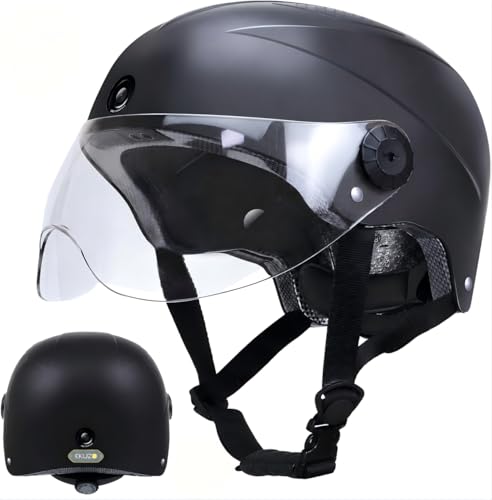 Best for e-bike and scooter ridersDC Smart Bike Helmet with Cameras Dual HD Front & Rear Video RecorderView on Amazon
- 5
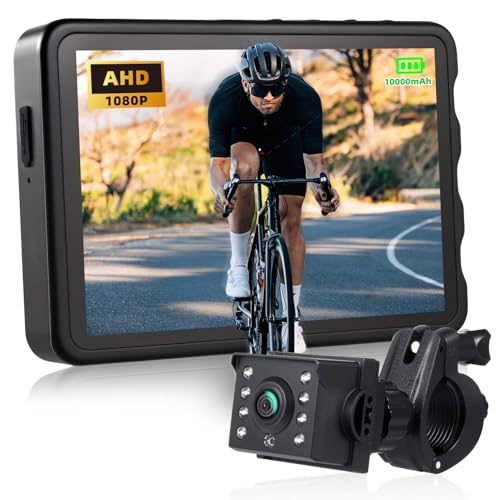 Best for adjustable rear monitoringFitense Bike Camera 360° Rotatable 5" 1080P Rear View MonitorView on Amazon
Our Top Picks
Quick Comparison
| Product | Best for | Key feature |
|---|---|---|
| MOTOEYE E6+ Motorcycle Helmet HUD | Riders who want rear view and navigation in one helmet system | Helmet-integrated rearview camera with heads-up display and Bluetooth |
| FEISIKE Bike Camera 4.3″ Rear View Monitor | Riders who prefer a handlebar-mounted screen | 4.3-inch monitor, 3X zoom, 145° wide angle |
| LKT 2K Motorcycle Helmet Camera | Riders who want front and rear recording on a budget | Dual front and rear recording with 64GB card included |
| DC Smart Bike Helmet with Cameras | E-bike and electric scooter riders | Dual HD front and rear recording with Bluetooth app control |
| Fitense Bike Camera 360° Rotatable Monitor | Riders who need an adjustable screen angle | 360° rotatable 5-inch monitor with 10000mAh battery |
MOTOEYE E6+ Motorcycle Helmet HUD, Bluetooth, Rearview Camera, CarPlay
MOTOEYE E6+ Motorcycle Helmet HUD, Bluetooth, Rearview Camera, CarPlay | Smart Helmet System, GPS, Android Auto, Mesh Intercom, Bluetooth Communication, Noise Reduction, IP66, Fits all Helmets
Best for: Riders who want rear view, navigation and calls routed through one helmet-based system.
This is a full helmet system rather than a standalone camera. It suits riders who would rather read information inside the visor than look down at a handlebar screen, and who already use or plan to use GPS and phone integration. Owners who value a single integrated setup with fewer loose cables tend to be the best match.
Key specs:
- Helmet-integrated rearview camera feeding a heads-up display
- Bluetooth communication and mesh intercom
- Noise reduction and IP66 rating as listed by the manufacturer
- Advertised to fit most helmets
Pros:
- Rear view appears in your line of sight rather than on a separate screen
- Combines rear view, navigation and communication in one system
- Manufacturer lists a weather-resistant rating suited to wet riding
Cons:
- More complex setup than a simple camera, with more components to charge and pair
- Higher commitment if you only want a basic rear view
Bottom line: The strongest choice for riders who want a true helmet-integrated rear view plus navigation and comms, and who are comfortable with a more involved system.
View on AmazonFEISIKE Bike Camera, 4.3″ Rear View Monitor, 3X Zoom, 145° Wide Angle
FEISIKE Bike Camera, 4.3" Rear View Monitor, 3X Zoom, 145° Wide Angle | 6000mAh Rechargeable Battery, Night Vision, Adjustable Bike Mirror, Real-Time Rear View, Fits Ebikes, Road & Mountain Bikes
Best for: Riders who want a dedicated screen mounted near the handlebars.
This system is built around a separate monitor rather than a helmet display, which makes it easier to read at a glance for riders who keep their eyes forward and prefer a larger image. It is commonly discussed in the context of bicycles and e-bikes, so motorcycle riders should check mounting compatibility with their own bars and mirror setup before buying.
Key specs:
- 4.3-inch rear view monitor
- 3X zoom and 145° wide-angle lens as listed
- 6000mAh rechargeable battery as listed
- Night vision function
Pros:
- Larger screen than most helmet-mounted displays
- Wide viewing angle covers adjacent lanes
- Long listed battery life for extended rides
Cons:
- The screen is a separate handlebar item, so you must look down or to the side
- Mounting and cable routing require more planning on a motorcycle than on a bicycle
Bottom line: A good fit for riders who prefer a stable handlebar monitor to a visor-based display.
View on AmazonLKT 2K Motorcycle Helmet Camera Front & 1080P Rear with 64GB Card
LKT 2K Motorcycle Helmet Camera Front & 1080P Rear with 64GB Card, 1920mAh 5H Battery, Dual Bike Dash Cam with Sony Starvis Sensor, WiFi Night Vision Cycling Camera Bike Camera
Best for: Riders who want front and rear recording at a lower entry point.
This unit is designed to record rather than display in real time. It suits riders who mainly want video evidence or a ride record and do not need a live rear view while riding. Pairing the front and rear feeds gives a fuller picture of a trip.
Key specs:
- 2K front and 1080P rear recording as listed
- 64GB card included
- 1920mAh battery as listed
- Sony Starvis sensor and WiFi as listed
Pros:
- Records both directions at once
- Card included, so setup is quicker
- Manufacturer lists night vision capability
Cons:
- Recording-first design means no live rear view on a display
- Listed battery capacity may limit very long rides without a charge
Bottom line: Best for riders who want a recording system with rear coverage and don’t need a live feed.
View on AmazonDC Smart Bike Helmet with Cameras Dual HD Front & Rear Video Recorder
DC Smart Bike Helmet with Cameras Dual HD Front & Rear Video Recorder for Ebike & Electric Scooter, Bluetooth App Control Action Cam Helmet, CPSC Certified (Black)
Best for: E-bike and electric scooter riders who want front and rear recording with app control.
This is a helmet built with cameras rather than a camera added to an existing helmet. It is aimed at riders who use small electric vehicles and want Bluetooth app control for starting and stopping recording. Check helmet fit carefully, since the integrated design limits your choice of size and shape.
Key specs:
- Dual HD front and rear video recording
- Bluetooth app control as listed
- CPSC certification as listed in the listing name
Pros:
- Camera and helmet come as one unit, so no separate mounting
- App control reduces the need to touch the unit while riding
- Lists CPSC certification, a relevant US safety standard reference
Cons:
- You cannot swap the cameras onto a helmet you already own
- Fit and sizing must be right before you rely on it for protection
Bottom line: A practical all-in-one choice for e-bike and scooter riders who want a helmet and camera in one purchase.
View on AmazonFitense Bike Camera 360° Rotatable 5″ 1080P Rear View Monitor
Fitense Bike Camera 360° Rotatable 5" 1080P 10000mAh Rear View Monitor | 130° wide angle dual night vision, rechargeable battery design, fits mountain and road bikes
Best for: Riders who want an adjustable rear monitor with a long-lasting battery.
This is a handlebar-style monitor system with a rotatable mount, which lets you aim the screen to suit your seating position. It fits the same use pattern as the FEISIKE monitor and suits riders who value screen adjustability and battery endurance over a visor display.
Key specs:
- 5-inch 1080P rear view monitor
- 360° rotatable mount as listed
- 10000mAh battery as listed
- 130° wide-angle dual night vision as listed
Pros:
- Rotatable screen adapts to different riding positions
- Large listed battery capacity for long rides
- Night vision function as listed
Cons:
- Handlebar screen requires glancing away from the road
- Listed as suited to bicycles, so motorcycle mounting needs careful checking
Bottom line: A solid pick for riders who want an adjustable, long-battery monitor and accept a handlebar-mounted display.
View on AmazonBuying Guide
Display type: helmet-integrated, handlebar monitor, or recording only
Decide first how you want to see the rear view. A helmet HUD keeps information in your line of sight but costs more setup effort. A handlebar monitor is easier to read in a stable position but requires a glance down or aside. A recording-only camera gives no live view but captures footage for review. Choose the method that matches how you actually ride.
Good picks for this: MOTOEYE E6+ Motorcycle Helmet HUD, LKT 2K Motorcycle Helmet Camera
Mounting stability and vibration
A rear view system is only useful if the image holds steady. Check whether the mount attaches to the helmet, the handlebar or the mirror, and whether it uses a locking clamp or adhesive. Vibration at highway speed can blur the image, so look for stable mounting points and secure cable routing that will not snag on the bike or your clothing.
Good picks for this: FEISIKE Bike Camera, Fitense Bike Camera
Helmet compatibility and fit
If you plan to attach a camera to a helmet you already own, confirm that the mount suits your helmet shell and that the added weight and position do not interfere with fit, visor movement or the chin bar. Integrated helmets, such as the DC Smart Bike Helmet, avoid this issue but limit you to that helmet’s sizing. Never modify a certified helmet in a way that could compromise its protection.
Good picks for this: MOTOEYE E6+ Motorcycle Helmet HUD, DC Smart Bike Helmet with Cameras
Battery life and charging
Check the listed battery capacity against the length of your typical ride, and consider whether you can charge during stops. Larger listed batteries generally suit longer rides, but actual runtime depends on whether you use night vision, Wi-Fi or wireless features, which all draw more power. Carry a charging cable and confirm whether the unit charges by USB.
Good picks for this: Fitense Bike Camera, FEISIKE Bike Camera
Night vision and low-light performance
Many riders use rear cameras at dusk or after dark, when headlight glare and low contrast make the feed harder to read. Look for a listed night vision function and check the lens and sensor details if provided. Test any display brightness settings before your first ride so you know the image is readable.
Good picks for this: LKT 2K Motorcycle Helmet Camera, Fitense Bike Camera
Weather resistance and durability
Riders often face rain, road spray and temperature swings. Check any listed water or dust rating, such as the IP66 rating on the MOTOEYE system, and read owner feedback about how units handle moisture over time. Keep connectors sealed and dry, and store the unit out of direct sun when not riding.
Good picks for this: MOTOEYE E6+ Motorcycle Helmet HUD, DC Smart Bike Helmet with Cameras
Setup, care and legal use
Route cables so they never block your view, your controls or your helmet’s ventilation. Keep the lens clean, since dirt on a rear camera lens quickly degrades the image. Check your state and local rules on helmet-mounted displays and on recording while riding, and do not watch video or a live screen in a way that distracts you from the road.
Good picks for this: FEISIKE Bike Camera, LKT 2K Motorcycle Helmet Camera
FAQ
Is a helmet rear view camera legal to use on a motorcycle?
Rules vary by state and locality, and some jurisdictions regulate helmet-mounted displays or in-helmet electronics. Check your state motor vehicle agency and local traffic rules before riding with any system, and consult a professional or your local authorities if you are unsure.
Can I add a rear view camera to any helmet?
Many standalone systems are advertised to fit a range of helmets, but fit and mounting security depend on your helmet shape and size. Confirm that the mount does not affect helmet fit, visor operation or protection before you ride.
Is a live rear view better than a recording camera?
A live view helps you react to traffic behind you in real time. A recording camera gives you footage to review afterward, which is useful for documenting rides. Many riders want a live view for safety and recording for records, so decide which matters more to you.
How do I keep a helmet camera from blurring while riding?
Use a stable mount that does not flex or vibrate, tighten all clamps, and route cables so they do not sway. Check that the camera is aimed correctly before you ride and that the lens is clean.
Do these systems work at night?
Several listed products include night vision functions, but low-light performance varies. Test brightness settings and the feed in dim conditions before relying on the system after dark.
How often should I charge a helmet rear view camera?
Charge frequency depends on the battery capacity listed, how long you ride and which features you use, such as night vision or wireless connections. Check the manufacturer’s runtime information and charge before long trips.
Conclusion
For a fully integrated helmet rear view with navigation and comms, the MOTOEYE E6+ is the most complete option. Riders who prefer a larger handlebar screen should look at the FEISIKE or Fitense monitors, with the Fitense offering a rotatable mount and larger listed battery. If you mainly want to record both directions on a budget, the LKT 2K covers that need, and the DC Smart Bike Helmet suits e-bike and scooter riders who want a helmet and cameras in one unit. Match the display type, mounting and battery to how you ride, and confirm legality and fit before you buy.
Sources
- Federal motorcycle helmet safety information and guidance on protective equipment (nhtsa.gov)
- Consumer product safety standards and certification information relevant to helmets and electronic accessories (cpsc.gov)
- Motorcycle safety training and rider-education resources
Related reading
- 4 Best Rear View Cameras for Motorcycle Helmet Options of 2026
- Rear Camera Motorcycle Helmet: How It Works and How to Choose One (2026)
- Helmet With Rear Camera: 4 Best Picks Compared (2026)
About Claire Whitaker
Claire Whitaker is part of our editorial team and reviews and edits our motorcycle riding gear guides, checking product details against manufacturer specifications and owner feedback.
About the author
Claire Whitaker writes reviews and buying guides for Max Motorcycle Videos.