Top 3 Motorcycle Helmet Integrated Camera Options with Dual Recording (2026)
Compare the best motorcycle helmet integrated camera options for 2026, with specs, pros, cons, and a buying guide to match your riding needs.
 By maxmotorcyclevideos editorial team
Updated November 7, 2026
As an Amazon Associate I earn from qualifying purchases. This page may contain affiliate links.
A motorcycle helmet integrated camera removes the guesswork from recording your rides. Instead of strapping a separate action camera to your visor or chin bar, the lens and mounting hardware are built into the helmet shell, which keeps the field of view stable and the setup clean. Riders who commute, tour, or want a record of track days tend to look for this kind of system because it balances protection, recording quality, and convenience. In this guide we compare three products across different use cases, explain the criteria we used to select them, and walk through what to check before you buy. Selection was based on published specifications, brand reputation, and patterns in owner feedback. We did not test these products ourselves.
Our Top Picks
Quick Comparison
| Product | Best for | Key feature |
|---|---|---|
| Sena Multi Momentum Pro Dual Bluetooth Camera Helmet | Riders who want a full helmet with a built-in camera and communication | Integrated camera with Bluetooth intercom support |
| Sena Momentum INC Pro Smart Bluetooth Communication Motorcycle Helmet | Riders seeking higher-resolution footage in a helmet with intercom | Integrated QHD camera with smart Bluetooth communication |
| LKT 2K Motorcycle Helmet Camera Front and 1080P Rear | Riders who want a dedicated dual-camera recording setup on a budget | Front and rear recording with included 64GB card |
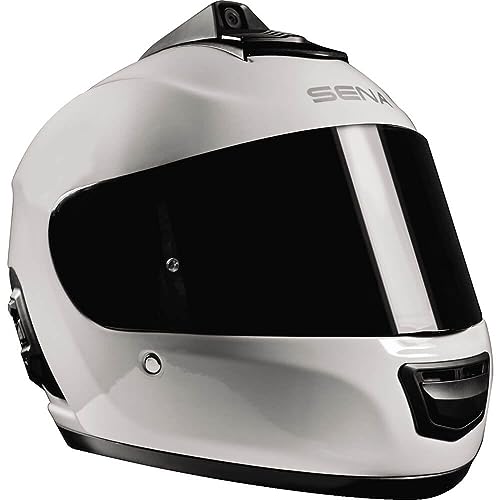
Sena Multi Momentum Pro Dual Bluetooth Camera Helmet Glossy White Md
Sena MO-PRO-GW-M-01 Multi Momentum Pro Dual Bluetooth Camera Helmet Glossy White Md
This helmet suits riders who want one unit that handles protection, recording, and communication. It is a good fit for solo commuters who occasionally ride with a passenger or group and want to talk without stopping.
Key specs
- Helmet with integrated camera system
- Dual Bluetooth communication
- Glossy white finish
- Medium size
Pros
- Camera is built into the shell, so the mount is stable and out of the way.
- Bluetooth communication allows calls, music, and intercom use without a separate headset.
- Single-unit design reduces the number of cables and accessories to manage.
Cons
- Owners often note that integrated electronics add weight compared with a plain helmet of the same shell.
- Battery life for the camera and communication features will vary with recording settings, so long rides may require planning for charging.
Sena Momentum INC Pro Smart Bluetooth Communication Motorcycle Helmet Integrated QHD Camera – Gloss White – XS

Sena Momentum INC Pro Smart Bluetooth Communication Motorcycle Helmet Integrated QHD Camera – Gloss White – XS
This model is aimed at riders who prioritize image quality and want a helmet-mounted recording option that also supports communication. It works well for touring riders who want sharp footage of the road ahead and clear audio during group rides.
Key specs
- Integrated QHD camera
- Smart Bluetooth communication
- Gloss white finish
- Extra-small size
Pros
- Higher-resolution recording than many entry-level helmet cameras.
- Integrated design keeps the lens aligned with your line of sight.
- Communication features make it practical for group rides and touring.
Cons
- Higher-resolution recording produces larger files, so plan for adequate storage and a fast card.
- Sizing is narrow at the extra-small end, so a fitting session with the size chart is important.
LKT 2K Motorcycle Helmet Camera Front & 1080P Rear with 64GB Card, 1920mAh 5H Battery, Dual Bike Dash Cam with Sony Starvis Sensor, WiFi Night Vision Cycling Camera Bike Camera

LKT 2K Motorcycle Helmet Camera Front & 1080P Rear with 64GB Card, 1920mAh 5H Battery, Dual Bike Dash Cam with Sony Starvis Sensor, WiFi Night Vision Cycling Camera Bike Camera
This is a dedicated camera system rather than a helmet with a built-in lens, so it suits riders who want front and rear recording on a budget. It is a practical choice for daily commuters who want evidence-quality footage without replacing their current helmet.
Key specs
- Front and rear camera setup
- 1080P rear camera
- 64GB card included
- 1920mAh battery
- Sony Starvis sensor and WiFi night vision, as stated in the listing
Pros
- Dual-camera coverage records both the road ahead and traffic behind.
- Included memory card means it is ready to use out of the box.
- Works with any helmet that can accept the mount, so you keep your current gear.
Cons
- Because it is not integrated into the helmet, the mount and cables can shift or need periodic adjustment.
- Owners often mention that low-light performance depends heavily on mounting angle and cleanliness of the lens.
Buying Guide
Choosing a motorcycle helmet with an integrated camera means balancing three things: how well the helmet protects you, how good the recording quality is, and how the system fits into the rest of your riding setup. Start with the helmet itself. Look for a current safety certification for your region, a fit that is snug without pressure points, and ventilation that suits the climate you ride in. A camera is only useful if you will wear the helmet every time, so comfort matters as much as features.
Important Features to Compare
- Video resolution and frame rate: Higher resolution gives more detail for reviewing incidents or sharing footage, but it creates larger files. Check what the manufacturer specifies for both front and rear recording.
- Low-light performance: Riders who commute before sunrise or after dark should look for sensor details and night-mode specifications.
- Storage: Confirm the maximum supported card size and whether the camera supports loop recording so older footage is overwritten automatically.
- Battery and charging: Note the stated runtime at your intended resolution and whether the battery is removable or sealed.
- Communication features: If you ride in a group, Bluetooth intercom support can be as important as the camera.
Specs to Check Before Buying
| Spec | What to look for |
|---|---|
| Helmet certification | Current DOT or ECE marking for your region |
| Camera resolution | Stated maximum resolution and frame rate |
| Field of view | Listed angle, checked against your typical helmet view |
| Storage support | Maximum card capacity and file format |
| Battery runtime | Manufacturer’s estimate at recording settings you will use |
| Mounting method | Integrated versus add-on, and compatibility with your helmet |
Choosing by Need
- Daily commuters: Prioritize a stable mount, easy charging, and a fit you can wear for long periods.
- Touring riders: Prioritize battery life, storage capacity, and communication features for group rides.
- Riders focused on footage quality: Prioritize resolution, low-light performance, and the sensor specifications the manufacturer publishes.
- Budget-minded riders: A separate dual-camera system can be a practical option if you already own a helmet you like.
If you already have a helmet you trust, a clip-on or dash-style camera may be the more sensible route. For guidance on choosing protective gear first, see 7 Best Full Face Moto Helmet Picks for Every Rider (2026) and 5 Best Full Face Motorcycle Helmet Helmets for Every Ride (2026).
Things to Watch Out For
- Integrated electronics can add weight and change how a helmet sits on your head, so test fit carefully before a long ride.
- Recording laws vary by location, and some places restrict audio recording of other people. Check local rules.
- Heat from continuous recording can shorten battery life, so keep spare charging options available.
- Lens cleanliness and mounting angle strongly affect footage quality, especially in rain or at night.
Helmet fit and safety are important decisions. If you are unsure about sizing or certification, consult a qualified motorcycle gear fitter or your local dealer.
FAQ
Does a motorcycle helmet with integrated camera affect helmet safety?
Safety depends on the helmet’s certification and fit, not on the camera alone. Choose a helmet with a current DOT or ECE marking, and confirm with the manufacturer how the integrated components were designed. Consult a qualified fitter if you have questions about impact performance.
Can I use a motorcycle helmet integrated camera for group rides?
Some integrated systems include Bluetooth communication, which allows intercom use between riders. Check the stated range and whether the system supports your group’s setup before relying on it.
How much storage do I need for helmet camera footage?
It depends on resolution and how many hours you record. Higher resolutions produce larger files, so estimate based on the manufacturer’s recording-time figures at your chosen setting and plan for a card that covers at least one full ride.
Will a helmet camera work at night?
Low-light performance varies by sensor and lens. Look for the manufacturer’s stated night-mode features, keep the lens clean, and check footage after a test ride at dusk.
Is a separate camera better than an integrated one?
An integrated camera gives a stable, low-profile setup, while a separate dual-camera system lets you keep your current helmet and record both front and rear. The better choice depends on whether you want to replace your helmet or keep it.
How do I keep the camera lens from fogging or getting dirty?
Use a microfiber cloth and a lens-safe cleaner, and keep your visor clean as well. Anti-fog inserts may help in cold or humid conditions, but check that they do not interfere with the camera’s field of view.
Do I need a special mount for a helmet camera?
Integrated systems use a built-in mount, while add-on cameras use adhesive or strap-based mounts. Confirm compatibility with your helmet shape and make sure the mount does not block your vision or interfere with the visor.
Conclusion
Each of these three options serves a different rider. The Sena Multi Momentum Pro is a sensible pick for riders who want one helmet that handles recording and communication together. The Sena Momentum INC Pro suits riders who care most about higher-resolution footage and touring communication. The LKT 2K system is a practical choice for riders who want dual front and rear recording while keeping the helmet they already own. Compare the specifications against your riding habits, confirm the helmet fits well, and check local recording rules before you ride.
Related reading
- Shoei RF-1400 Full Face Motorcycle Helmet Review: Is It Worth It?
- Mountain Bike Full Face Helmet Fox?
- Helmet Mountain Bike Full Face Review (2026): Who Is It For?
- 7 Best Bell Mountain Bike Full Face Helmet Options for Trail Riders (2026)
About the author

maxmotorcyclevideos editorial team writes reviews and buying guides for Max Motorcycle Videos.